21.7.06


what nature denied in one way for the support of man is bestowed in another in the unlimited quantity of fish which surround the coast , particularily the herrings'
Eddrachilles 2nd statistical account 1845
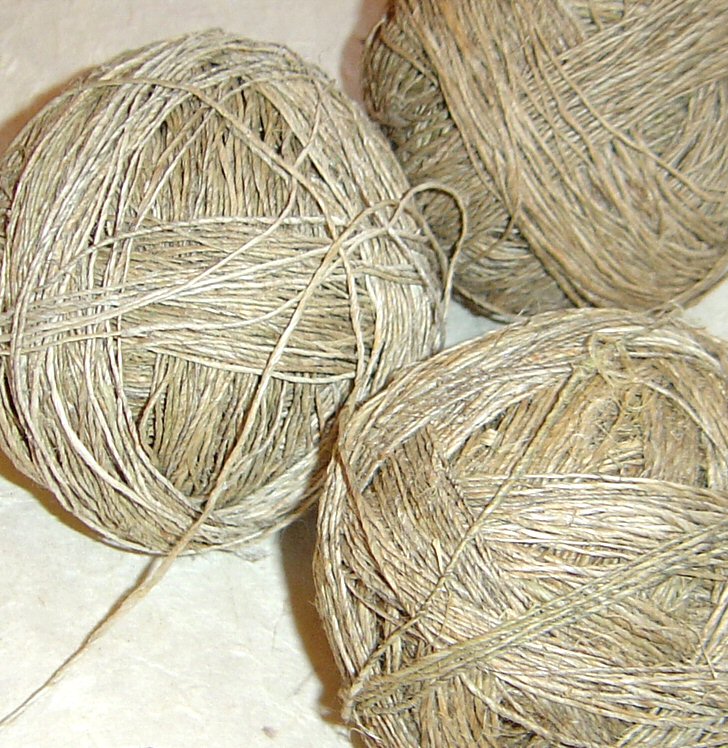

'a rate charged for spinning hemp for herring nets'

'making and repairing nets'
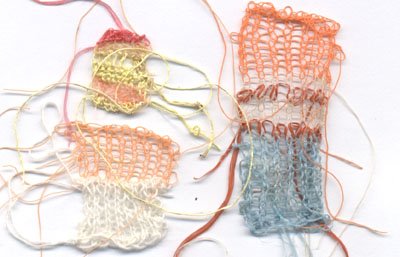


knitting with threads washed up on the beach

fishing nets and line


finding fishing line, nets and twine on scourie beach, i have been thinking of incorporating these 'found threads' in some sort of way.. they have been washed up on the beach having spent time with people at sea. i collected colours which linked with colours of the birds beaks / feet






plume trade protest


I was interested to know more about the use of feathers at that time and found an article relating to feathers and bird killing at Lundy island.. I had also read that in Handa they used fulmar oil in lamps.

I'n the late 1800's, fashionable ladies' hats were adorned with lacy feathers called plumes'

“in 1816, 379 pounds of feathers were plucked by the women, 24 puffins yielding one pound of feathers’

'Auks are the most profitable, twelve of them producing one pound of feathers after being plucked they are skinned; these skins are boiled in a furnace for the oil they yield, which is used instead of candles'


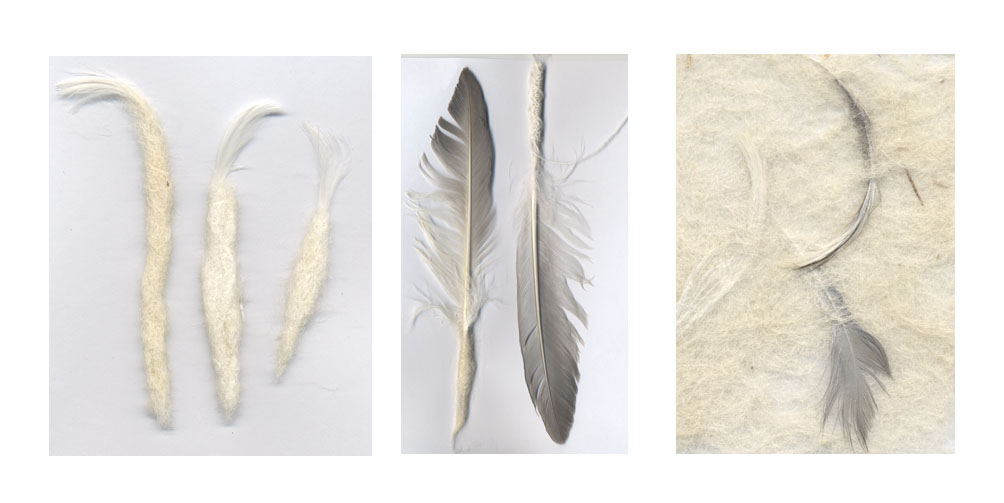
experimenting with feathers and fleece


'bartering feathers for an equal weight of wool'


'The only inhabited island is Handa. it is separated from the mainland by a narrow sound. Its name is celtic Aonda ' the island of one colour' or Aon-tach ' the island of one side' in either of which sends the appelation is just and applicable.
Many of those who live nearest this land as well as inhabitants make it their buisness as often as they can , to come with boats to this place and besides catching and killing great numbers of them, to the great benefit of their families in a way of provision, they make considerable profit from the feathers bartering them commonly for an equal weight in wool. The flesh of the birds ( the young ones excepted ) has a filthy taste ofensive to most palates.
Three men at different times left their lives by falling from the rocks, where they were unhappily scrambling in pursuit of them and their eggs.............

In surrounding areas their occupation in the winter is thrashing corn, attending their cattle, making and repairing herring nets and trimming nets for the ensueing season, the females spinning and knitting. The rate charged for spinning hemp is 6d per pound ...
statistical account 1845
handa research

  • past inhabitants
  • present inhabitants
  • emigration/ cape breton
  • stories anecdotes
  • archives
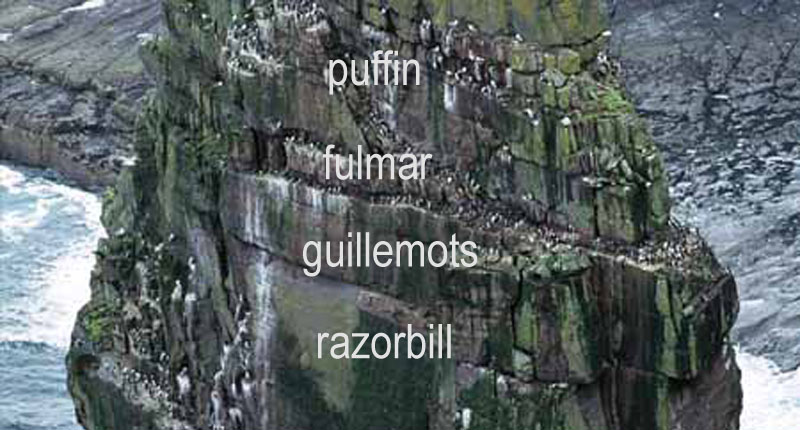
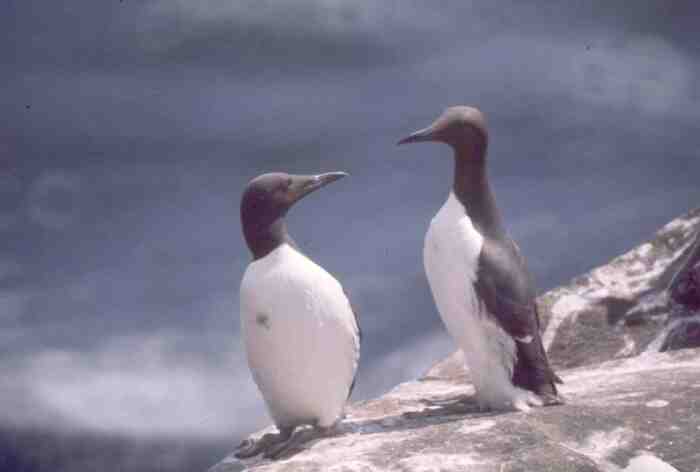
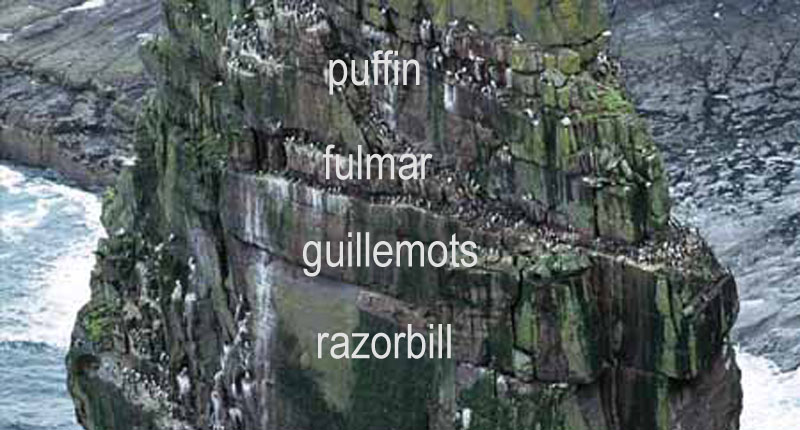
  • bird species
  • characteristics
  • migration
  • flight patterns
I havent been able to find much information on the parliament of Handa but did find some information of a similar practice in St Kilda..

Decisions concerning all matters were made by an informal meeting that took place each weekday morning - known as the `St Kilda Parliament' it consisted of all the adult males on the island. It had no rules, no chairman and 'members' arrived in there own time. Once assembled the 'parliament' would consider the work to be done that day. The islands' schoolmaster in 1889 wrote that the parliament 'very much resembles our Honourable British Parliament in being able to waste any amount of precious time over a very small matter while on the other hand they can pass a Bill before it is well introduced''
www.utopia-britannica.org.uk/pages/StKilda.htm


Women in St Kilda did meet each day for an informal meeting and I did find out that in Handa the queen did have the last say in all disputes!


parliament of Handa / hierarchy/ location of birds


When thinking of the parliament on Handa I began to think of the current tenants of Handa and the hierarchy of the birds position on the stack.

colony...company ....flock....parliament... ...party

These terms are not group names for a particular type of bird,but have been commonly used for many different types:


the birds as current tenants of Handa

•emigration
•The migration of people out of a country.
•immigration
•The migration of people into a country.

•migration
•the regular, recurrent, seasonal movement of populations from one geographic location to another and back again.
I have been thinking of ideas around emigration/migration and looking at bird migration. People left Handa at a time of famine and those that emigrated arrived at Cape Breton at a time of famine also.
' hungry birds do not set off on migrations if food supplies diminish they may move to find a better source of food'
'a bird needs a reserve of fat in its body to be able to travel long distances especially those on non stop or very long flights'
'many birds double their weight before migration while larger birds will gain less than this'
emigration migration

17-May-2006
Surname(s):
Query Text:
Seeking descendants of George Morrison b. 1791 Handa Island Sutherland, Scotland, and his wife Christian MacKay b. 1791. children were David Morrison b. 1821, Alexander Morrison b. 1824, John Morrison b. 1826, Peter Morrison b. 1829, Donald Morrison b. 1822, all probably born in Kinlochbervie or Oldshoremore, Eddrachillis Parish, Sutherland, Scotland. Have information to share. Is there any way of determining which families lived on Handa Island before everyone left c1847? Most families came to Canada

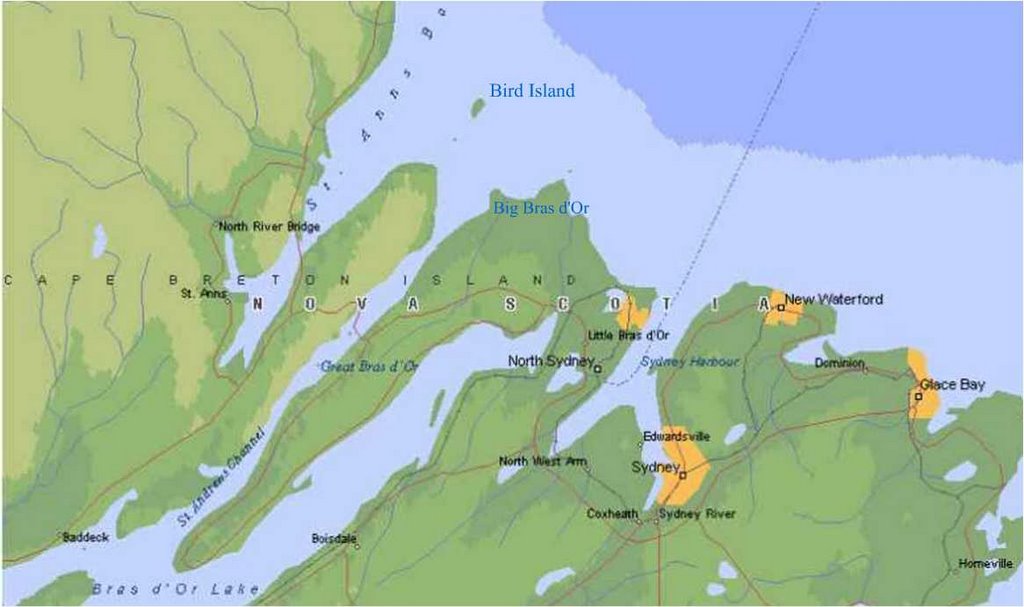
When first thinking about Handa island I was particularily interested in the people who lived there prior to leaving and emigrating from the island in 1848. I also began to think about the present inhabitants the birds each with their own behaviour and characteristics. The human population emigrated but a current population of birds migrate to the island every year. It seems that the population emigrated to Cape Breton and I discovered that there is also a bird island there also. This lead to developing ideas of trying to link with Cape Breton in some way.


Handa island


When looking at the history of Mackay county I was particularily interested in Handa island.
Handa Island was home to 65 people in 1841, complete with its own Queen (the oldest widow) and a daily parliament to allocate the work that needed doing. The potato famine in 1848 led to the migration of the islanders to Canada and it has been uninhabited since. Handa rises to a height of 400ft . It is a Site of Special Scientific Interest and is owned by Dr Jean Balfour and in collaboration run as a nature reserve by the Scottish Wildlife Trust. Over 170 species of birds can be seen on Handa, including the 100,000 resident guillemots, along with 216 species of plants and 100 mosses.


I will be one of three artists in residence in Mackay county over the next three months. I hope to keep a diary of my ideas and progress.
This is the first arts-based project for the Durness Development Group under the overall management of Ronnie Lansley. The three-month project is supported by a National Lottery grant through the Scottish Arts Council and with partnership funding from Highland Year of Culture 2007