31.8.06


i have been thinking today about wool being spun and knit into fishermans sweaters . i will try and find out more about patterns or as to what type of sweaters there were here . i could possibly incorporate that into one of the birds ( if i ever get the razorbill finished!)

30.8.06

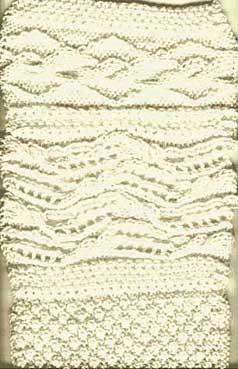
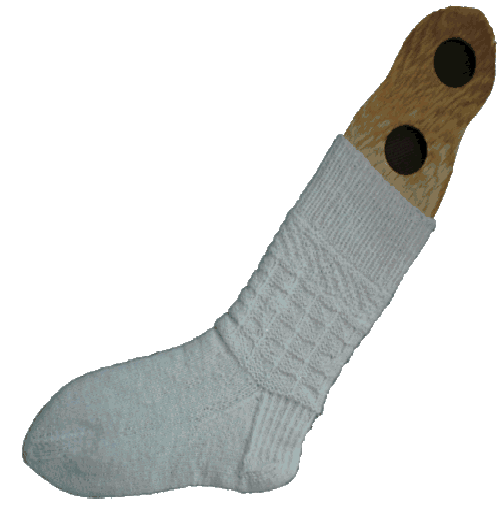
I have been looking at turning the heel of socks as a way of creating curved parts of birds ...the heads in particular. i have been talking to a local lady about the fleeces of sheep being sent off to the spinners and in return they got hanks of wool. This was then knitted into fishermans jumpers and socks.

Heel Flap: 1st row (WS facing): *P1, slip 1; rep from *. End p2. 2nd row: K to end Rep rows 1 and 2 for 2½" (2¾" for men). Heel: 1st row: Slip 1, K 12, K2tog, turn 2nd row: Slip 1, P 7, P2tog, turn 3rd row: Slip 1, K 7, K2tog, turn Rep rows 2 and 3 until there are 8 sts on needle; last row Slip 1, K 6, K2tog

29.8.06


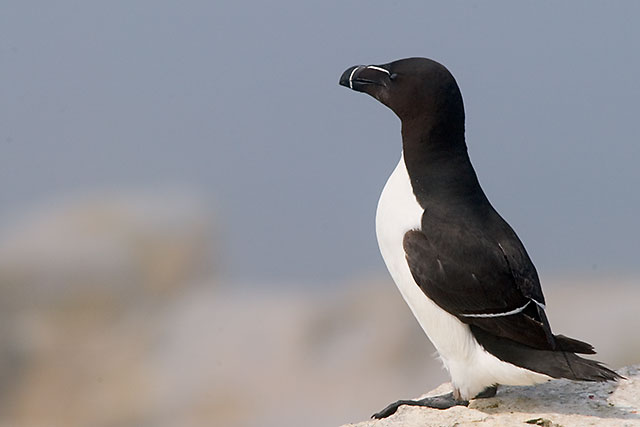
i am trying to knit a razorbill which is turning out to be quite difficult!if i can knit a puffin i am sure i am do a razorbill also...! i am knitting it with cotton silk and Shetland wool and creating the feet and bill from black twine found on the beach . i hope to make the birds actual size but have realised that there is alot of knitting in a razorbill!

i have been gathering information about each bird

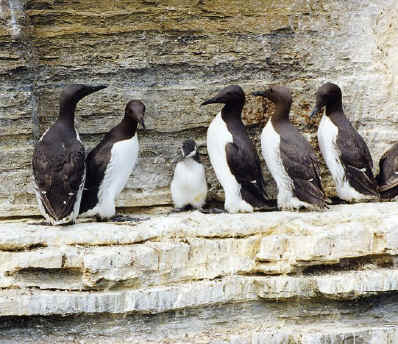
Razorbills live in colonies.

They are very noisy with quarrels disputing territories between neighbours or intruders.

They come on land (rocky cliffs) only to nest, spending the rest of their life at sea.


Females lay one egg onto cliff ledges; its pear shape prevents it from rolling off.


Usually you can see them at the surface of the water flying in colony and making a "V".


As Guillemots, Razorbills dive to obtain food. As Puffins, adults Razorbills can stock some fish in their beak.


Half of the world’s population of razorbills breeds in Britain and Ireland


Ungainly on land and walks with a shuffle but is perfectly at home in the sea where it is an excellent swimmer


It can carry up to a dozen small fish at a time in its beak


Spend winter at sea go as far as the Mediterranean in winter


Circles landing spot several times

26.8.06


am being attacked by midges today.. think i may make a midge or two. i have been using avon 'skin so soft' to keep them away but am not sure whether it works or not. its great to think all the big butch men around here are wearing avon skin so soft and smelling so sweet!


i was looking up information on midges and came across an e.bay advert .. ebay seem to put anything up to get someone to get to their site.


Find Scottish Midge!
Buy Scottish Midge on
eBaywww.ebay.co.uk
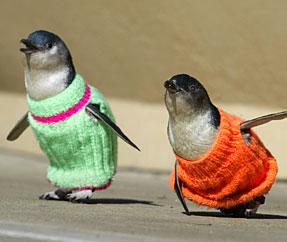
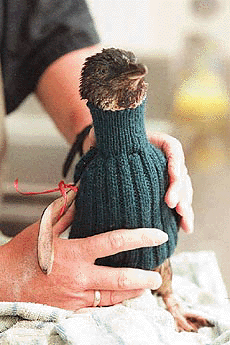
i found an article about a project in the past where jumpers were being knitted for penguins

'A Port Augusta woman who knits 260 tiny jumpers every year is part of an international effort to save thousands of fairy penguins threatened byoil spills in Australias Bass Strait.
Mrs Betty Gow is part of a loose collective of knitters from around theworld who make and donate the little garments used to protect fairypenguins covered by oil. Rescue teams retrieve the oiled birds from the beaches and they aretreated at the Phillip Island Nature Park Penguin Hospital. The birdsare cleaned, fed and given veterinary care before being released back into the wild.Fellow contributors from around the world provide more than a thousand of the jumpers a year, which are used to cover the birds affected during oils spills.
The penguins, which grow to around 33cm, are often covered in oil fromthe spills as they return to Phillip Island's beaches from the deeperwater of the Strait.The jumpers, when fitted, keep the penguins from preening (picking at their feathers) to remove the oil, which is highly toxic to them. Later they are used to protect them after cleaning, a process that temporarily affects the natural oil keeping the birds warm and waterproof.'

25.8.06

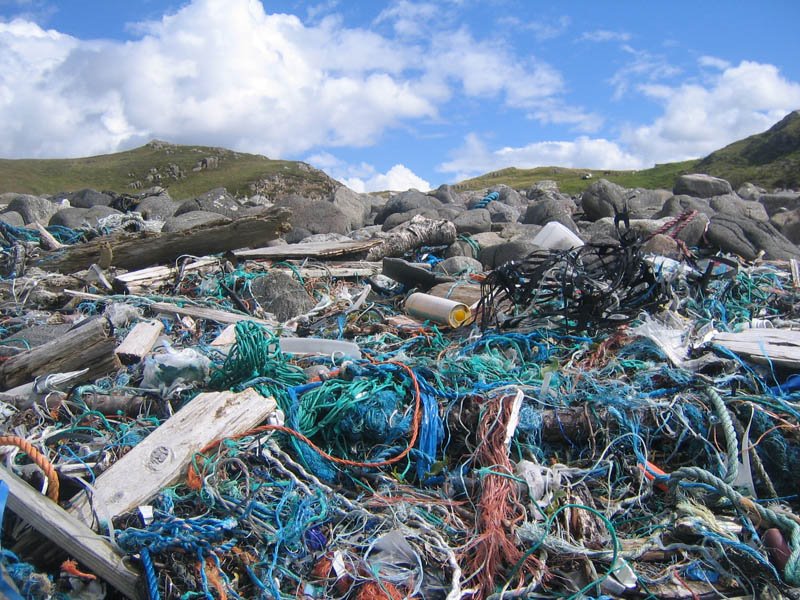
this has been my source of 'threads' for beaks and feet of the birds.


using found materials washed up from the sea links with the importance of fishing and the sea but also to recycling/ rubbish on the shore .


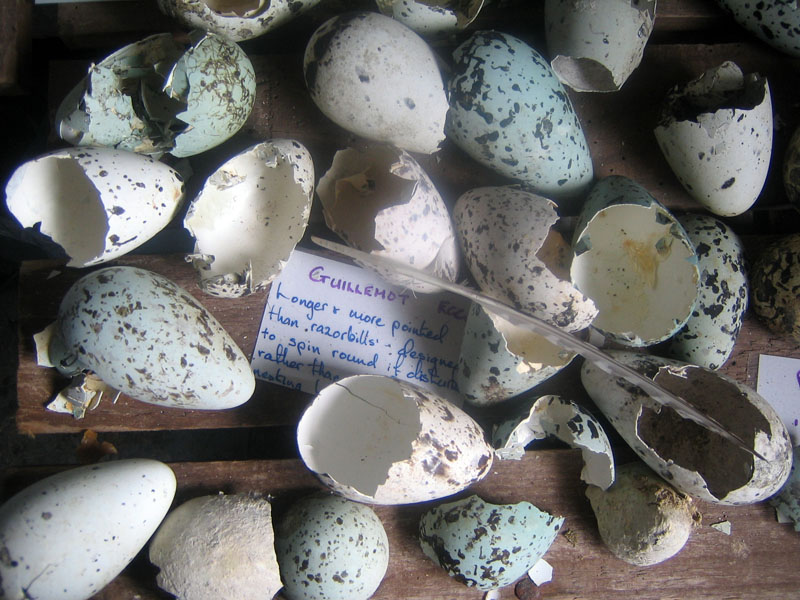
when on Handa i found a broken egg with a chick inside on the grass. a skua has possibly taken the egg from the rocks. i have been thinking about making eggs using some of the pale blue fishing line and twine found on the beach in scourie.

23.8.06

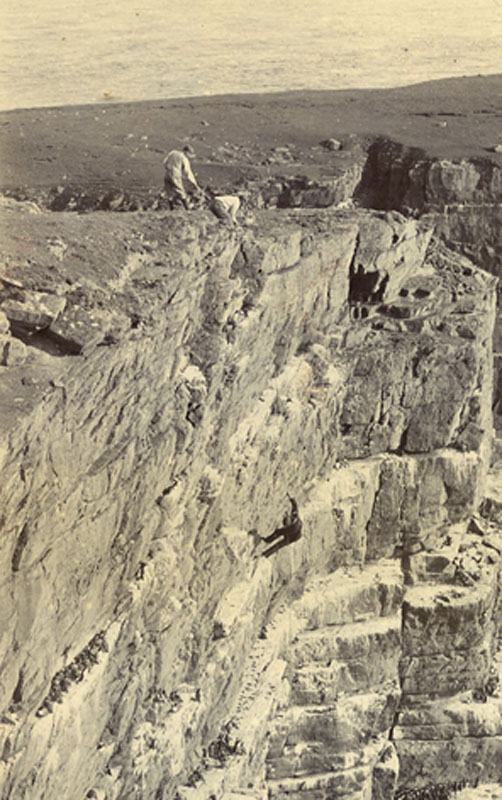
guillemot egg collector

'collecting guillemot eggs involves climbing overthe edge of the cliff and making your way down to the precarious ledges where eggs are found

as well as the obvious danger of falling from a great height into the raging sea you also run the risk of being attacked by guillemots who quite naturally want to keep their eggs from your clutches. such birds assaults may result in cuts and bruises or more seriously in loss of contact between you and the cliff face

the rewards of this task are not many. however the protein provided by regularily eating guillemot eggs make the difference between life and death for your family. the position is therefore only open to the desperate'

worst jobs in history. channel 4

22.8.06


'self sufficient in their isolation they had organised a tight matriarchial society. it is significant that the queen was the oldest widow of the island for the men of the island risked their lives, fishing and harvesting Handas special asset the seabirds. they climbed for food , birds and eggs for themselves and feathers for trade with the mainland'
Auk Family guillemots, razorbills and puffins

'members of the great sea bird clan'

I have been thinking about families of birds and families living on Handa. Looking at a consensus of 1841 on Handa i see that many people living on the island at that time were Macleod

I have also been thinking of residents of Handa emigrating and taking their cultural identity with them through language , music/ culture. Although the residents would may not have worn tartan, using tartan may be a contemporary link..

..birds with tartan patches or sneaky bits of tartan under their wings ...

gaelic could feature also.

puffin ......fachach.....razorbill.....coltraiche....guillemot...eun dubh an sgadain

I have been watching a film on Handa ( Handa Island ,summer RSPB ref 3608 Scottish Screen archive). it is an interesting film with some great footage of the island and the birds. When commenting on the birds there are descriptions of the accomodation of the birds

'luxury apartment ( gulls) or overcrowded slum ( razorbill and guillemots)'


21.8.06


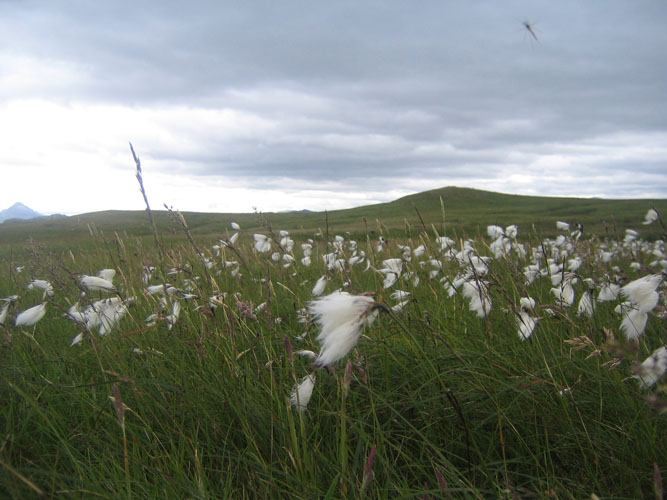
bog cotton

Handa island
when a coastal area is dangerous,
folklore has it that bog cotton is flagging a warning.
on a visit to Handa i have been photographing and taking small video clips of bog cotton in the wind.


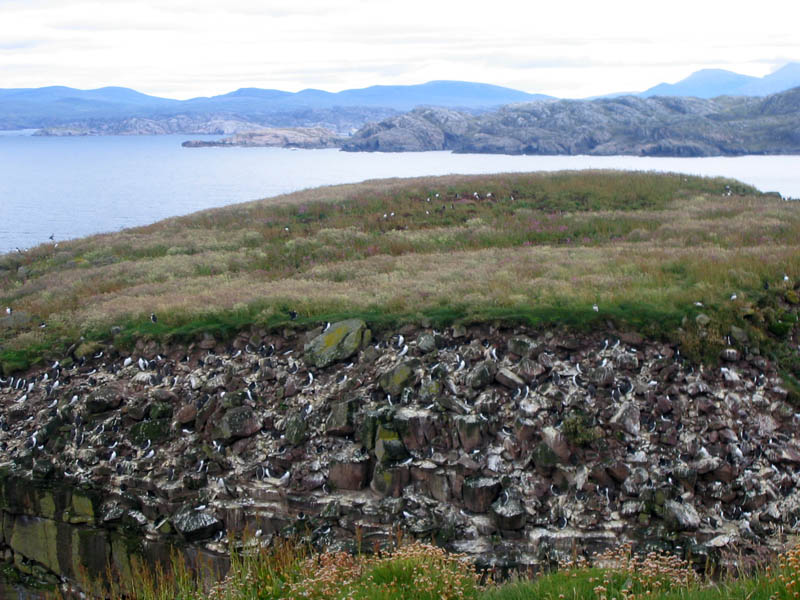
The stack on Handa.
From a distance you dont realise that there are so many birds on the stack . apparently there are 90,000 guillemots on Handa.. They along with the other birds are the current tenants of Handa..in my first visits to Handa the cliffs were crammed with birds and on later visits the birds had gone and the place seemed quite eery without them.
I have been reading a book called 'findings' by Kathleen Jamie.. many of her descriptions are relevent to Handa and the birds.
'the westerly wind brought squalls in like great wings. only a few fulmars were at home, the puffins burrows empty waiting for spring'
'the air was worked by oystercatchers, fulmars and terns'
'the oystercatchers went piping overhead'
'knowing birds is like being fluent in a foreign language or adept at a fluent language'
'most of the wardens work is negotiating and compromising with people rather than the birds. given the conditions, the birds will look after themselves. Its the tenant farmers and neighbours that need the managment '

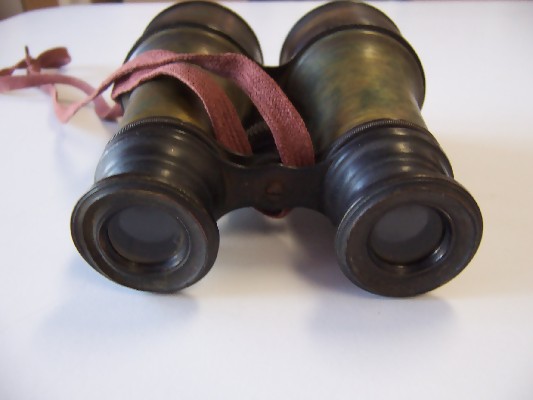
i have been thinking about binoculars and wondering if there is a way i can incorporate them in the work.. it would be great to have an exhibition of the birds where the viewer had to look at the exhibition through binoculars from a distance


knitted puffin spotted human watching on Handa island

I have been thinking of ways to work with the knitted birds and thinking of ways of documenting them on Handa island. This could be an interesting way of engaging young children with the history of the island

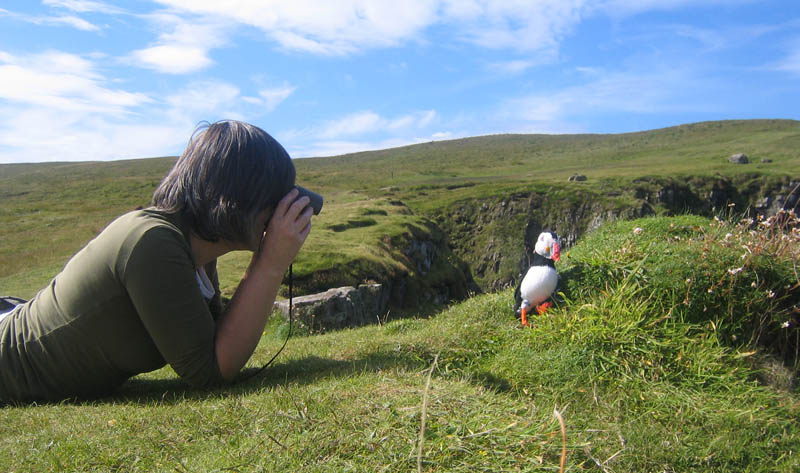
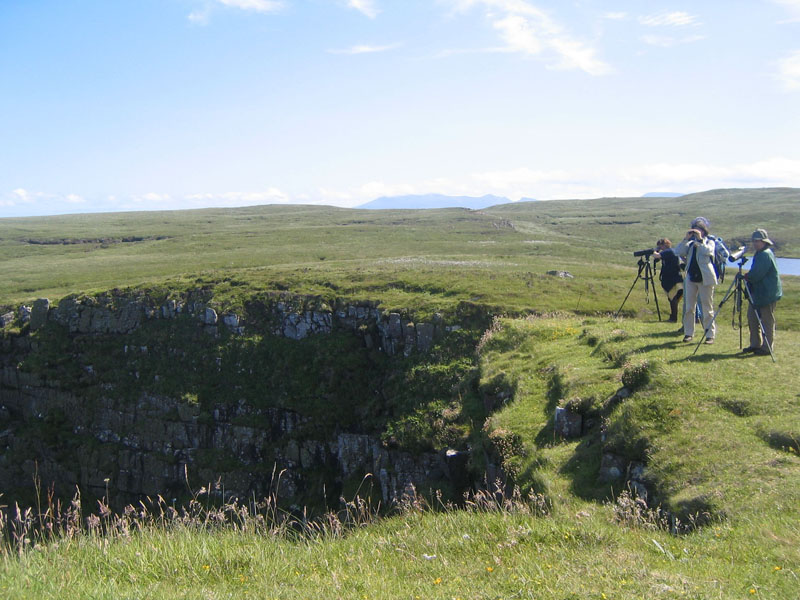
i think i am becoming a twitcher myself

20.8.06


I was amused by the ammount of 'twitchers' on Handa island and wondered about the birds and how they felt about being stared at .

Apparently puffins love to have an audience.

I could possibly make a pair of binoculars for a bird so that they could look back at the twitchers.

19.8.06


residents on Handa island ( undated)


board walk on Handa.

visitors walk around the island on a designated path as many of the birds are breeding on parts of the island so it is protected. There are many interesting plants and mosses at the edges of the paths.
I have had a few problems uploading photographs but at last can show some of the photos taken on trips to Handa.

I have been over to Handa in all weathers but have hada few fantastic days with clear skies. Even on wild and windy days Handa is a special place and it has been interesting to imagine life for the people there before emigration and relocation.

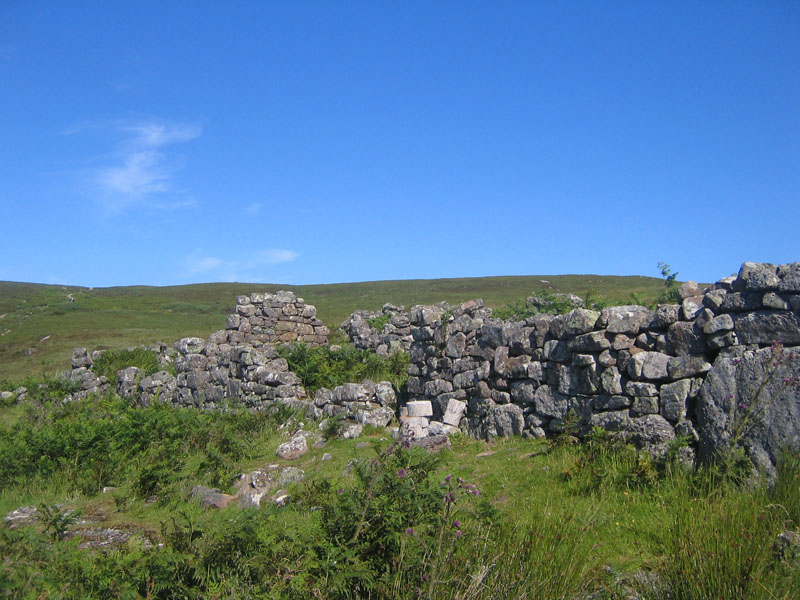
I have stood inside the ruins looking out to sea with the view that inhabitants would have had when living there.

ruins of houses on Handa.

18.8.06


one bird complete


I have found an exhibition space for my first bird. He will live in the ticket office for the Handa boat to greet people going over to Handa.

Handa ferry ticket office Tarbet

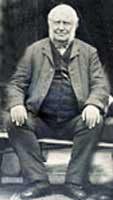
Evander Maciver
factor .Scourie
His ghost is said to haunt Scourie Lodge.
Clearance in the wake of famine had a different aim. Earlier removals were about relocation there was still an advantage in keeping people/ tenants to work. After the famine the aim was to reduce population rather than relocate.1000's were evicted and 16 000 people shipped overseas between 1847 and 1857

When famine came Evander Maciver claimed to be amazed by the reaction of crofters which was panic. People had fresh memories of vicious clearances . He claims he was approached by many crofters who asked the Duke of Sutherland to fund emmigration.

About 1000 people emigrated at a cost of 7000 to the Duke

When Handa was cleared it became part of Macivers farm. Maciver though that crofting was not a sensible way of life for local people and thought it was good that local people learn how to work!!
He had a free hand in running the estate and thought he had done a good job in improving peoples lives

' there is no duty I performed during my services as a factor in Sutherland on which I look back with more satisfaction than the time and trouble and care I expended in carrying out the transportation of so many families from the poor position of crofters in a wet climate and a poor soil for cultivation to the more fertile lands of Canada , Nova Scotia and Austrailia'

16.8.06

I have been thinking again about ideas of emigration and migration. The people of Handa emigrated at a time of famine and arrived in Nova Scotia/ Cape breton at a time of famine also.
'Disaster struck parts of Cape breton between 1845 and 1849 when potato blight ( or rot ) devastated its crops. As ever it was the newly arrived , with the worst land who suffered the most'
After the Hector the scottish pioneers of Nova scotia and Cape Breton
hungry birds do not set off on migrations if food supplies diminish they may move to find a better source of food
a bird needs a reserve of fat in its body to be able to travel long distances especially those on non stop or very long flights
Sir John Harvey wrote to Earl Grey the colonial secretary explaining that this 'province is in no respect prepared for the reception of poor people....'the intervention had emmediate impact . while large numbers of destitute Scots arrived at Pictou in the following year, they avoided Cape Breton.
I am wondering if people from Handa managed to avoid the famine or arrived before this.


12.8.06

Thinking about the current tenants of Handa, and trying to combine ideas to date I have been thinking of knitting birds incorporating wool, fishing nets and line for the beak and feet. Each bird may connect with Handa history in some way through the materials used and possible labels in presentation.

Starting with a puffin I have been knitting with 5 needles (a similar process to knitting a sock) shaping the body of the bird as I go along. I also have been reading alot about puffins.
I was listening to a programme on radio 4 where there was a discussion on sea birds and the eating of puffins! Apparently people on St Kilda had puffins in their porridge or puffin pie was made!
'379 pounds of feathers were plucked by the women, 24 puffins yielding one pound of feathers’

24 puffins = 1lb of feathers
24 puffins = 1lb of wool

11.8.06


After a period of research I am now working in my sketchbook to try and formulate ideas and bring everything together in order to make ..

i am interested in ideas of

  • bartering of feathers for wool
  • subsistance lifestyle of Handa, fishing, collecting eggs and eating flesh of birds
  • studying the birds and their characteristics as current tenants of Handa
  • finding stories of people associated with Handa

ideas of possible materials to use

  • wool
  • feathers
  • fishing line
  • materials washed up on beach

8.8.06

I have been reading about the clearances and in particular Handa island trying to understand the history and resulting emmigration to Canada.

'The Sutherlands were in posession of this land for over a century. Europe at this time was in a continual state of war and this resulted in amongst other things an increasing demand for wool and mutton. The economic climate at the time of the industrial and agricultural revolutions encouraged the Countess to inflict a devastating policy on the inhabitants of Sutherland'
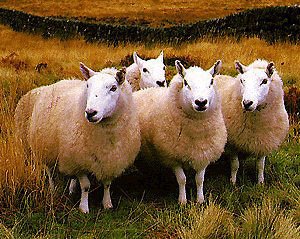


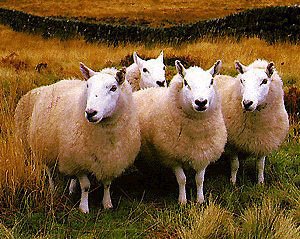
By 1822 the area was dominated by sheep farms with people moving to a harsh less fertile coastline


' when enlisting officers toured the highlands in 1854 to recruit men for the Crimea war they were greeted by men bleeting like sheep. The Duke was told

'since you have preferred sheep to men, let sheep defend you '

'and the sheep oh the sheep have been the cause of great suffering starvation and sorrow

it has driven many to the shore and over the sea

my body has known the pain of seeing white sheep and deer nibble at the land they have left

that would feed many a gael'

speech in lochcarron school in 1886 after hearing about the crofters act being past.

I have been thinking that wool may play an important part of my work based on Handa. I have been talking to a local spinner about spinning the the wool of the cheviot sheep. This would link with the history and the use of local materials.

Increased development of cloth manufacturing added to the importance of wool growing, and no wool could compare with the Cheviot in making the durable "Tweeds"