22.10.06


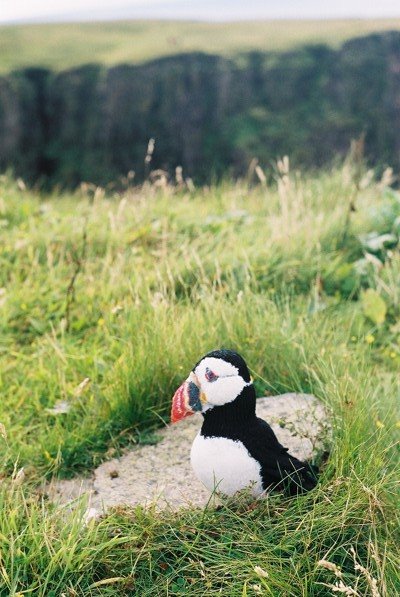
i have just had some photographs developed which were taken on Handa with George the knitted puffin ..


George Mackay of Handa
apparently there was a man called George mackay who had 21 children ( and one wife!).. he was so attractive that all the women were always asking if he were married!

20.10.06


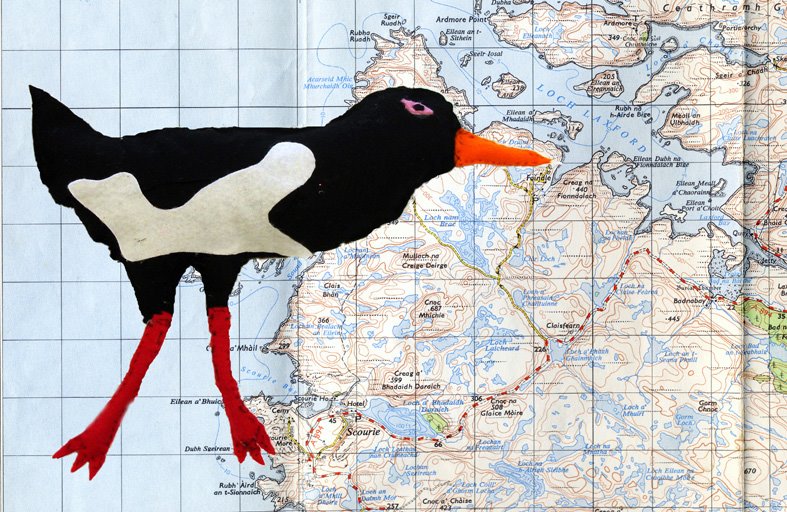
i have been experimenting with different backgrounds and maps of the area of Scourie and Handa


i have been preparing the pupils birds for printing onto postcards. these will be sent on their journey to Cape Breton ..


18.10.06

i have been looking at emmigration lists again in a book called 'after the Hector' the scottish poineers of nova scotia and cape breton 1773 - 1852.. by Lucille H. Campey

i came across some passenger lists from earlier emmigrations ( than the people from Handa) each occupation is listed .. its seems that all the womens occupations were listed as 'spinsters'.. i didn't know being a spinster was an occupation !!!

on a sadder note on some passenger lists 'cause of emmigration' was listed ...
  • farm taken from him
  • rent raised but could not live by it
  • want of employment
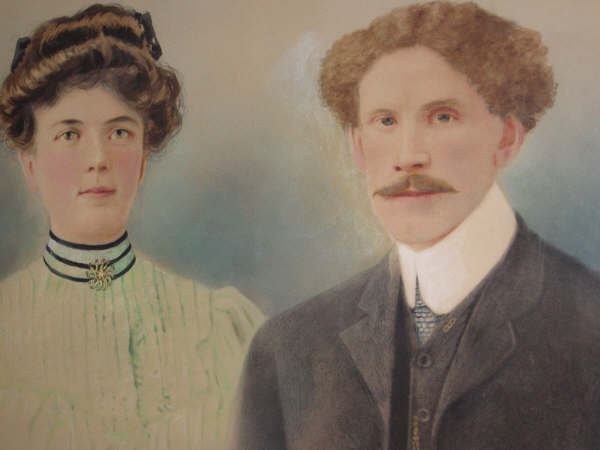
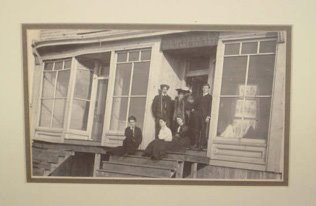
i have had another e.mail from Nancy the art teacher in Cape Breton with some images of her grandfather. its great to think that her personal family research is carrying on over there .


'I have included a photograph of my grandfather James Murdock McLean , when he was a tailor in Inverness Nova Scotia and also a portrait of him with his first wife. Dad has a paper that suggests that an ancestor left Lock Broom in 1803 when she was 2 years old. It says that she was kept nursing so that her passage would not have to be paid. and it says that she came over on theHector....Did the Hector make more voyages ?


it is interesting that her grandfather was a tailor. this ties in well with childrens stitched birds


17.10.06


local news!!

http://www.northern-times.co.uk/news/fullstory.php/aid/753/
Knitted_birds_in_link_with_Nova_Scotia.html


before leaving sutherland i was told a story about a local woman who had a wooden box with letters from those who had travelled to Cape Breton . she had collected stamps from the letters.
this lead me to find images of cape breton stamps of the 1850's and i am now thinking of ways i can use this.


16.10.06


today i have been organising the images of the childrens work to prepare them for printing onto postcards.


15.10.06


i arrived back in glasgow tonight and will take some time to aclimatise to the city again! i will continue to blog as the birds are in progress.


11.10.06


'every fourth stork is Polish'
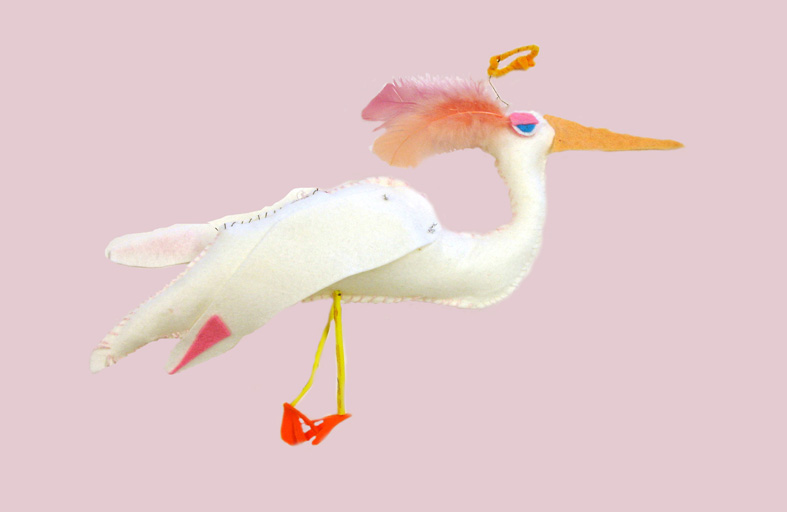
i have been thinking about emigration and immigrants in this country. there is a large population of Polish now living in this area so i am beginning to think of ways i can incorporate this into the work. looking at Polish birds i discovered that storks are an important bird there. i am not sure that i can knit one though!!

Each spring, Poland welcomes home roughly 25 percent of the nearly 325,000 white storks (scientific name Ciconia ciconia) that breed in Europe. When the storks return from their wintering grounds in Africa, they are attracted to tall trees or buildings where they build nests that often weigh up several tons. People sometimes attach wagon wheels to rooftops and barns or tall poles near buildings in hopes of luring the birds to nest near their homes. Today, telecommunications companies put up special poles and nest supports for the storks.
Nearly 41 thousand “couples” of the 160 thousand worldwide breed in Poland,
thus, “every fourth stork is Polish.”

9.10.06

a friend has sent me a link to an american knitting group .. http://www.knittaplease.com/Home.html
Knitta began in August 2005, when AKrylik and PolyCotN were discussing their frustration over unfinished knitting projects: half-knitted sweaters and balls of yarn gathering dust. That afternoon, they knit their first doorknob cozy. Then it dawned on them… A tag crew of knitters, bombing the inner city with vibrant, stitched works of art, wrapped around everything from beer bottles on easy nights to public monuments and utility poles on more ambitious outings. With a mix of clandestine moves and gangsta rap — Knitta was born! Today, Knitta is a group of more than 10 ladies of all ages, races, nationalities, religions, sexual orientation… and gender.
and another interesting knitting link.......

6.10.06


i have now completed school work and am beginning to pull all the imagery together for printing onto postcards. these will be returned to the school and each child can write message to be sent to cape breton.
i now have one week left in Sutherland on my residency but will continue blogging when back home in glasgow. ( possibly more efficiently as i will be back to broadband internet!) i will also continue to knit !


3.10.06

this is a knitted piece from an artist called rachael gomme

'In making work about waiting, one of my aims was to make concrete the time spent waiting which often ‘disappears’ when the thing awaited arrives. This is How Long is a cumulative performative knitting piece. For a residency in London, I knitted each time I waited for public transport. Each different-coloured section thus marked and materialised a time of waiting. Each time I returned to the gallery for which the piece was made I hung the work, marking on the wall the times and places where I had waited.'

i have been thinking of the time invested in making and how often i am never sure how long it has taken me to make work. i should begin to document the time involved in the next bird .

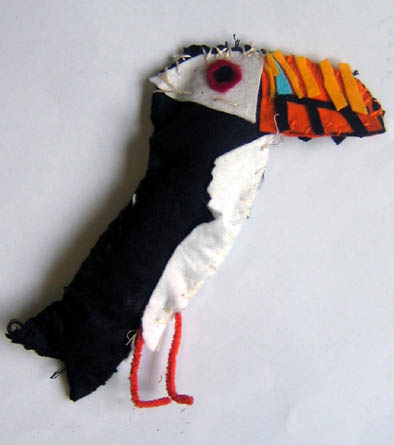
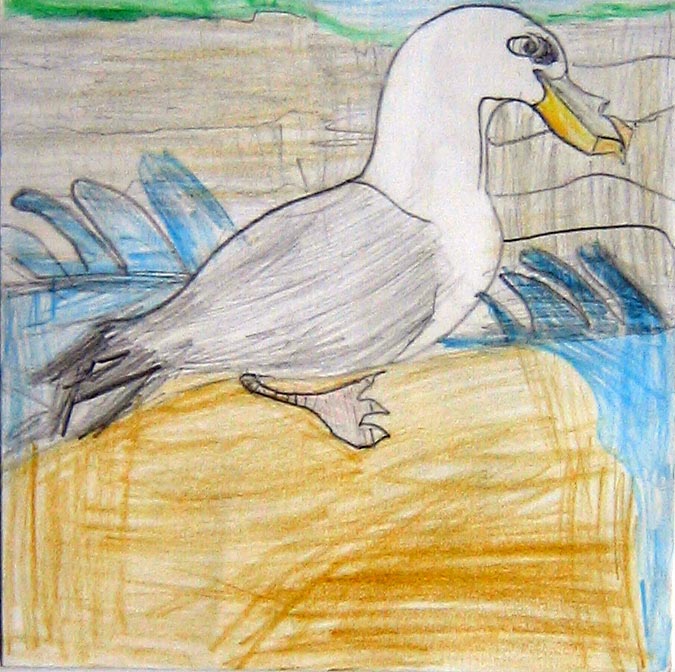
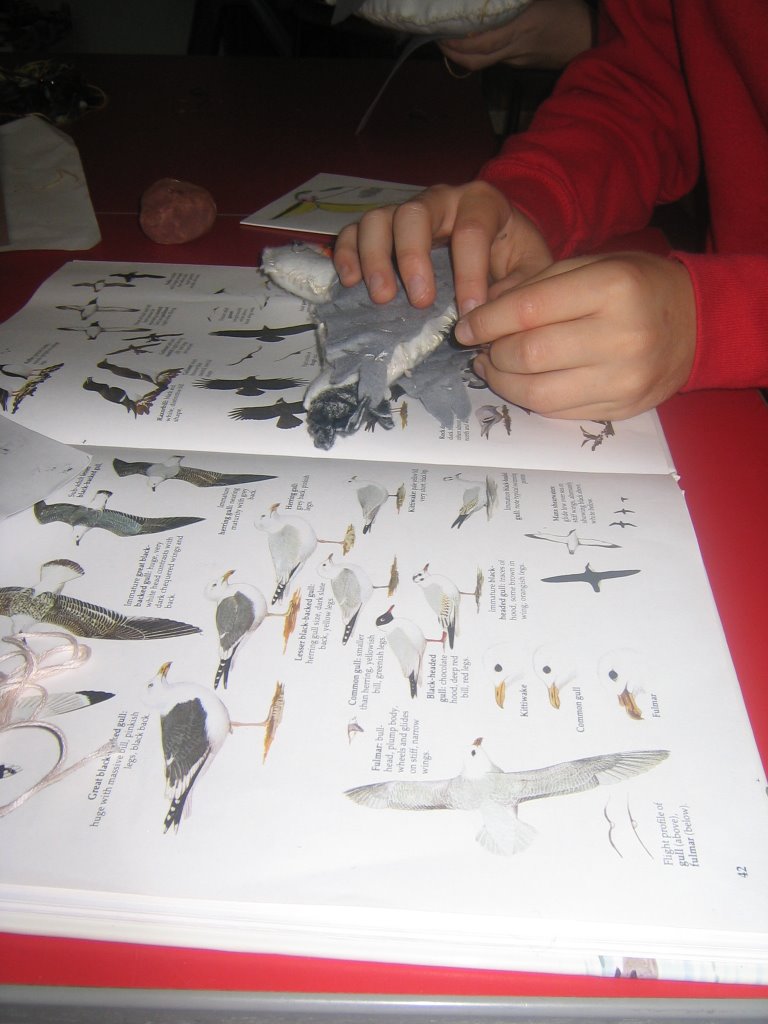
i have now finished work in the schools. it has become an important part of the residency with each child making a bird. the birds are fantastic and each has its own personal characteristics.
an image of each bird will be sent to cape breton on a postcard......over 60 bird cards will be posted
i found great websites with quirky knitting

http://www.donnawilson.com/

http://www.freddierobins.com/#


1.10.06

i have been looking at albino birds trying to decide whether to make the oystercatchers eyes, legs and bills pink.

'You can get what are called albino birds, although they are unusual. Most albinos have normal coloured eyes, bills and legs, but their feathers have no colour pigmentation making them completely white. Very rarely true albino birds are seen. In addition to white feathers, these have pink beaks, eyes and legs.'
i have started the legs of the oystercatcher making them from pink twine found on the beach. when trying to find images of the birds legs and feet i came across some information on damage to oystercatchers legs and feet from sheeps wool

'One of the distressing aspects of getting close to Oystercatchers is discovering the high proportion that have injuries to their feet and legs, caused by their becoming entangled with sheeps' wool on their breeding grounds (mostly in the uplands of England, Scotland, the Faeroe Islands, Iceland and Norway). Sometimes ringers are able to help the birds by removing the wool, but usually it is too late. The birds seem to be able to adapt to this and there are many long-lived examples.'


cheviot wool sock bird hanging on the line to dry!